Wednesday, October 31, 2018

Character Types: Antagonists and Villains

What’s the difference? How are they important in fiction?
Brandi Spencer (formerly B. C. Marine), Secretary-Treasurer Authors 4 Authors Publishing
To celebrate Halloween today, let’s talk about the scariest of fictional characters, antagonists and villains. An antagonist is a force opposing the protagonist. A villain is a character with malevolent intent or actions.

Aren’t those the same thing?

Nope! It’s true that in many stories, the antagonist is also a villain. It’s easy to identify them: Snow White’s stepmother, the Wicked Witch of the West, Dracula…
But that’s not always the case. To better demonstrate the difference, let’s focus on characters who are not both.

Antagonists

One thing that’s important to understand about an antagonist is that it is essential to the story. A protagonist without opposition isn’t doing anything. If you’re scientifically minded, think of literature as having its own version of Newton’s third laws of motion. For every action the protagonist takes, there is an opposite reaction by someone or something—the antagonist. There are a few different versions of non-villain antagonists.
Friendly Opposition
Most people wouldn’t describe their friends and family as malevolent or evil, but often they are a protagonist’s biggest opposition. They mean well, but their desires happen to run counter to the main goal. Example: A boy wants to go to a party, but his mother grounds him for fighting with his brother. Though the mother does it for the boy’s own good, she is his antagonist.
Lovers and Future Friends
These are similar to the friends and family but less amiable. However, less amiable doesn’t mean malevolent. They could be potential lovers or rivals who become friends of the protagonist. Most romance novels use this type. The protagonist is avoiding love, but the antagonist is driving them toward a relationship, or vice versa. Again, the antagonist’s actions aren’t malevolent—they aren’t even necessarily intentional. In the case of a lover antagonist, they may thwart the protagonist’s desire to avoid love simply by existing.
The Protagonist
Yes, you read that right. The protagonist can be their own antagonist. Although Dr. Jekyll and Mr. Hyde are a prime example, most protagonists who serve as their own antagonists aren’t quite so extreme. Someone who’s self-destructive or stands in their own way can be their greatest foe, but so can someone who’s simply battling their own weakness. Example: A man trying to be a good leader is fighting crippling shyness, and that aspect of himself is his antagonist.
A Force of Nature
An antagonist doesn’t need to be a person. An animal, the weather, or geography could all be the primary opposition to the protagonist. Survival or disaster stories make use of this most often, but it appears in all kinds of fiction. Example: To return home, a woman must cross a desert alone. The desert is the antagonist.
Temporary Antagonist
Every story needs a main antagonist, but did you know that each scene has its own antagonist as well? One difference is that scene antagonist may be opposing a main character rather than the protagonist if they are not in the scene. This character may be friendly or supportive for the rest of the story but acts as an opposing force in this one instance. Example: A man and his friend are planning an attack on the main antagonist. The man wants to charge their foe, but his friend thinks a sneak attack would be better and questions the plan. They debate and eventually reach a compromise. Though not truly the antagonist of the story, during this debate, the friend is functioning as one.

Villains

Unlike the antagonists, which can have neutral, benevolent, or non-existent intent, villains are defined by their malevolence. But why would a villain not be the driving force against a protagonist?
Villain Protagonist
If the villain is the protagonist, then the antagonist is likely to be a hero. Dorian Gray is a classic example.
Substitute for the Antagonist
People love to root against a villain, but in a story where the antagonist cannot be a villain, such as with a force of nature, sometimes a villain will be placed in a story to soak up the hate that the audience can’t direct at inhuman force. This character doesn’t ever get in the protagonist’s way for long but is rude, mean or downright evil.
No Villain
Sometimes stories don’t even use a substitute villain for their non-villainous antagonist. While an antagonist is an essential story element, a villain is not. It’s possible to have a story with no villain at all.

Why does it matter?

Because antagonists are necessary, and villains are not, knowing which is which can make or break a story. For writers, in striving for realism, villains are often discarded, but it’s important to not lose the antagonists as well, or the story will fall apart. For readers, being able to identify the antagonist without labeling them as a villain can lead to more honest and in-depth discussion or analysis of our favorite characters and their true roles.

Join us next week when we’ll look at their opposites: protagonists, main characters, and heroes.

Let's Keep in Touch!

Follow us on Facebook and Twitter to keep up to date on our books, authors, and more!
Can't wait? Check out our website for available books!

Wednesday, October 24, 2018

Types of Characters

Which ones are essential to building a story?
Brandi Spencer (formerly B. C. Marine), Secretary-Treasurer Authors 4 Authors Publishing
In every story, each character fulfills a basic role. In fact, these roles are so basic that they can all be listed in this article!

Why?

Knowing the role of a character is essential to both writing and analyzing fiction. For authors, misidentifying key roles can cause an otherwise interesting premise to fall apart over the course of the narrative. For readers, knowing these character types will give you a point of reference to compare them across multiple stories.
What are they?
Over the next few weeks, we’ll go over each of these in depth, but these are types from most essential to least:
You CANNOT have a story without a protagonist. This character drives the story. His or her choices and actions form the major turning points. Unless two or more characters are somehow acting as one, a story general only has one protagonist.
Like the protagonist, the antagonist is necessary to the story and is the main force opposing the protagonist. Even a story with only one character still has an antagonist. A protagonist fighting against their own nature can be their own antagonist, or the environment can be an antagonist in a man-vs.-nature story.
Main Character
A main character provides the point of view. In stories with an omniscient narrator, the main character would be whoever the narrator follows most frequently. Usually, a main character is undergoing an emotional journey. A story can have multiple main characters. The protagonist may or may not be one of them. If a story has any deuteragonists, they may be main characters as well.
Most of the time, when people think a story has multiple protagonists, what they’re really referring to is the existence of a deuteragonist. This character is similar but secondary to the protagonist. At major turning points of the story, their actions will usually follow the protagonist’s.
Hero or Heroine
While one definition of hero is the same as a main character, the more useful definition is it’s primary one: someone admirable, noble, and courageous who achieves great feats or is endowed with great abilities.
Villain

Villains commit evil or have evil motives. Similar to the relationship between protagonists and main characters, villains and antagonists often overlap but are separate roles.

Secondary Characters (Secondary, Tertiary, and Background)
These characters are important support for the protagonist, antagonist, deuteragonist, and/or main characters. They have names and history and follow the more essential characters throughout much of the story.
Tertiary Characters
Their roles are even smaller than secondary characters’. They perform important roles for a scene or two and may even have names but quickly disappear.
Background Characters
More like a props than actual characters, background characters exist to populate the world of the story. The extras in a movie would be background characters in a novel.

Multiple Roles

As noted, a single character can fill more than one role. Let’s use a romance for an example. We have a woman who’s actively looking for love, and half the book is written in her point of view. She’s both the protagonist (driving the plot) and a main character (POV). The other half of the book is written from a man’s point of view. He’s reluctant to get into a relationship and is on an important mission to right some wrong from his past. He’s the deuteragonist (his B plot), a main character (POV), and the antagonist (opposes her quest).

Breaking It Down


Over the next several weeks, we’ll go over these character types in smaller pieces, focusing on the differences between similar types. Next week, to celebrate Halloween, we’ll start with a comparison of antagonists and villains.

*This blog post has been updated with links after publishing and will only include links with the first mentioned character title or proceeding blog posts.

Let's Keep in Touch!

Follow us on Facebook and Twitter to keep up to date on our books, authors, and more!
Can't wait? Check out our website for available books!
Wednesday, October 17, 2018

Interview with Katelyn Barbee


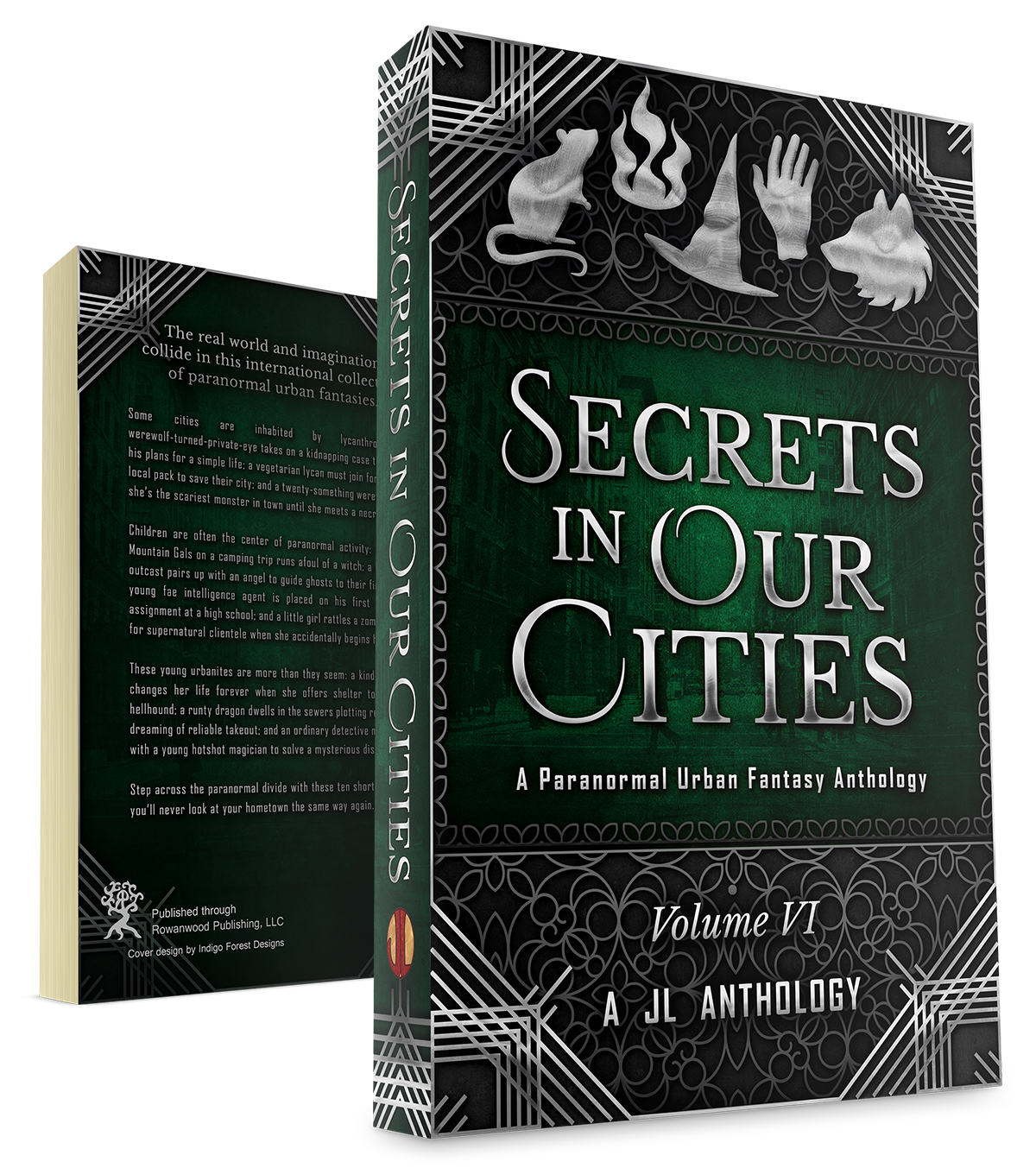
To get ready for the release of the next JL Anthology, let’s check back in with author Katelyn!
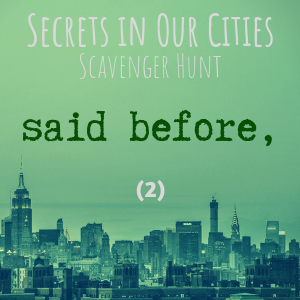
This blog post is part of the Secrets in Our Cities Scavenger Hunt. You can participate by visiting all of the participating blogs, a list of which can be found in the introduction post on the Just-Us League’s website.
Once you’ve gathered all of the clues, figure out the secret line and submit it. One lucky winner will receive a paperback copy of Secrets in Our Cities, and three lucky winners will receive ebook copies.
The Scavenger Hunt will be open until midnight EST on November 5th, 2018. The winners will be announced on the Just-Us League’s blog on November 7th, 2018. Your information will only be used to contact you if you win a prize.

Katelyn, what did you write for this anthology?

I wrote “No Rest for the Werey” which involves a world-weary (no pun intended) werewolf P.I. who reluctantly takes on a strange, supernatural kidnapping case.
What was your inspiration?
A couple years back I had started a novel with Charlie (my werewolf P.I.) as the lead, but never got around to finishing it. He’s such a fun character and has such a long, rich history that it seemed like a waste not to use him somewhere.
I can’t wait to “meet” Charlie. Speaking of him, do you have a favorite character? And if so, who?
Ooo, that one’s hard! Hmm… Charlie’s probably the most obvious answer. At over 500 years old, he’s just seen too much of the world, so he acts like one of those old noir detectives—tough, bitter, and aloof—though he’s softened over the years. And, depending on when a story involving him is set, he might be an anti-hero or even the villain! His transformation into a hero has been a very long and slow process, but it’s mostly stuck.
Then there’s Trip, my octogenarian necromancer. He’s this sweet grandpa who performs these blood magic rituals to communicate with the dead in his living room. *laughs* He’s also one of the few people in the world who can keep Charlie in line. They play well off each other because they’ve got so much history between them.
I am partial to those old detective movies! Sounds like an intriguing story.
Last time we hosted you here, we discussed how you were developing a cosmere, similar to Brandon Sanderson. Does this story fit into that cosmere?
Ah, well…in a sense, yes, they’re part of the same world. I’ve toyed with the idea of having characters from my other series showing up as cameos in Charlie’s stories, though I’ve kept them seperate so far. I don’t have plans yet for intertwining the two universes, but I could and the specifics of Charlie’s werewolfism were taken from my other series, so while I never say they’re part of the same world, they could be (if I wanted to take things that way).

In the spirit of Halloween, I’d love to ask some personal questions! First of all, what is your favorite Halloween tradition?

I’m partial to decorating the house (both inside and out) to celebrate the season, though carving Jack-o-lanterns and trick-or-treating are both high up on my list. Oh! And watching scary movies! And— *laughs* Really, I love all of it.
We’re big on Halloween at my house as well! Did you have a favorite costume or character to dress up as growing up? What about now?
Hermione Granger or Ginny Weasley were (okay, are) my most frequently used costumes. My and friends would all dress up as various characters from the Wizarding World and go to parties and/or trick-or-treat together. There were so many of us in full costume we could nearly reenact the books if we wanted to! :D
My husband is a dead-ringer for Harry Potter—so dressing up as those characters is on our “to do one year” list.
Was any part of your story inspired by the spooky stories told around this time of year?
In a way. While researching sleep paralysis, I stumbled across the lore of the (night) mare. According to tradition, it’s a malevolent entity that sits on or “rides” the chest of a sleeping victim and induces bad dreams. Imagine waking to find a hag-like creature sitting on top of you, but unable to move or cry out, your chest slowly being crushed as you suffocate. Absolutely terrifying if you ask me.
The real world and imagination collide in this international collection of paranormal urban fantasies.
Some cities are inhabited by lycanthropes: a werewolf-turned-private-eye takes on a kidnapping case that upsets his plans for a simple life; a vegetarian werewolf must join forces with a local pack to save their city; and a twenty-something lycan thinks she’s the scariest monster in town until she meets a necromancer.
Children are often the center of paranormal activity: a troop of Mountain Gals on a camping trip runs afoul of a witch; a high school outcast pairs up with an angel to guide ghosts to their final rests; a young fae intelligence agent is placed on his first undercover assignment at a high school; and a little girl rattles a zombie-run pub for supernatural clientele when she accidentally begins haunting it.
These young urbanites are more than they seem: a kindhearted girl changes her life forever when she offers shelter to an injured hellhound; a runty dragon dwells in the sewers plotting revenge while dreaming of reliable takeout; and an ordinary detective must team up with a young hotshot magician to solve a mysterious disappearance.
Step across the paranormal divide with these ten short stories, and you’ll never look at your hometown the same way again.

Scavenger Hunt

Remember to read all the Scavenger Hunt blogs to get all the clues!

Let's Keep in Touch!

Follow us on Facebook and Twitter to keep up to date on our books, authors, and more!
Can't wait? Check out our website for available books!
Wednesday, October 10, 2018

The Voyeur in the Sky: Third Person POV

The most widely used of the points of view
Rebecca Mikkelson, Editor-in-Chief Authors 4 Authors Publishing
Last week we talked about second person POV, and why it’s more suited toward Choose Your Own Adventure books than novels. Today we’re going to be finishing up with third person POV, the most widely used POV.

What is Third Person POV?

Third person point of view is the most commonly used point of view out there and is identified by the he, she, they, and it pronouns used within the prose. Unlike first and second person points of view, there are more than two ways to write in third: close/limit, distant, multiple, and omniscient.

Third Close/Limited

Close/Limited third person point of view is when the story is told within the head of the main character without using the I and my pronouns that first person point of view uses. It’s a technique that takes the best of both worlds in that you can draw your reader in closer than you would with the other third POV techniques, but you don’t run into the pitfalls you would in first where you have difficulty describing the main character. You’re giving your readers the distinct voice of the character rather than the writer. As with first person, though, you are limited to only the main character’s point of view.
You might be wondering how close/limited would read in comparison to distant, so let me give you an example:
She walked into the bar, looking for her date. Great. There were already a ton of people there, and she didn’t recognize over half of them. How on earth was she supposed to find John now? He said it was a party for both of their friend, the liar.
Third Distant
Third person distant takes you out of the main character’s head and puts you straight into the narrator’s. The narrator, while telling the reader the main character’s emotions, will generally have a more objective or factual feel than a personal tone.
I’ll use the same example from above, but write it in distant third:
She walked into the bar, eyes scanning for her date. Her mouth turned downward. There were several people there, the majority of whom were unfamiliar. The crowd would make it difficult for her to find her date. She would need to talk to him about who was invited since she scarcely saw her friends.

Third Multiple

With third person multiple, you now follow different characters in the plot and allow them to tell the story in their own voice rather than solely the main character. The writer, for example, can tell their story from both the main character and antagonists’ point of view so the reader now knows both sides of the story and how they interact with each other. Third multiple can be combined with both close and distant points of view. If you are going to tell a story in multiple points of views, it’s essential to make a clear indication of the shift so there’s less chance of the reader getting confused. A few ways this can be accomplished is by naming which point of view you’re in at the head of a chapter, or using a scene break and starting the new scene with the name of the character whose POV you’re shifting into.

Third Omniscient

Omniscient is the hardest of these techniques to master because it is sometimes indistinguishable from writing in third person limited or multiple. You might recognize it as the way many of the classics are written, like Anna Karenina or Pride and Prejudice. There are two ways that you can write in omniscient—subjective and objective. The first is when the narrator has a distinct voice while still being able to tell the reader the thoughts and emotions of all the character. The narrator is felt rather than implied. With the latter, objective omniscience, the narrator becomes invisible, and you see the scene play out as you would if you were a fly on the wall, and it does not delve into the thoughts and emotions of the characters as the narrator does in subjective. Think of objective omniscience like watching reality TV, except it’s written and usually has an end goal in mind.

Head Hopping

You can be guilty of head hopping in any of the third person point of view techniques, not just omniscient, though it is the easiest to slip into when trying to write omniscient. It’s very easy to do when writing multiple if you’re switching POV anywhere other than a scene or chapter break. What differs from omniscient and head hopping is that head hoping has the individual tone of a character rather than the objectiveness of a narrator when speaking on a character’s feelings and emotions.
Conclusion

No matter what way you choose to write in third person point of view, practice and being able to objectively identify when you break a rule are key to making your story as clean as possible.

Let's Keep in Touch!

Follow us on Facebook and Twitter to keep up to date on our books, authors, and more!
Can't wait? Check out our website for available books!

Wednesday, October 3, 2018

It’s All About You: Second Person POV

The least used Point of View
Rebecca Mikkelson, Editor-in-Chief Authors 4 Authors Publishing
Last week we talked about First person POV and how it can put the reader in the narrator’s shoes and make them experience the writing in a deeper way. This week we’re going to be talking about second person POV.

In Your Own Little Corner, In Your Own Little Chair

Second person point of view is one of the least written in POVs because of its difficulty not only to write but to market. It exclusively uses pronouns you, your, and yours in the prose to address the reader directly and make them into a character themselves. The point of view is akin to first person point of view in that it draws the reader in more deeply than third person point of view, which puts distance between the reader and the characters.
Novels written in second can be compelling if they’re done right, and the reader will feel the emotions more intensely because they’re being told what to feel, but it is a very difficult point of view to master. One shining example of a successful second person POV novel is Jay McInerney's Bright Lights, but it is the exception to the rule. More often than not, editors and publishers alike will tell you not to write a novel exclusively in second POV because it can ask more of your reader than they’re willing to give, and thus, you alienate your reader.

You Can Be Whoever You Want to Be

On the flip side, and the end of my Debbie-Downer rant on second person point of view, Choose Your Own Adventure style books are a very successful way to use second person point of view. Often these are bought for children who will read them until they’ve played out every possibility, but more recently, it’s coming back into style for adults. In a world where daily life is consumed with politics, drama that happened at work, and drama that’s happening at home, sometimes adults just want to escape the fact they have to adult where it’s peopley outside.
If I were ever to tell you to write in second person POV, Choose Your Own Adventure books would be the direction I would steer you in.

Conclusion


While it isn’t a very often used point of view, second person POV can be successful, though rarer than the other points of views. If you’re considering taking on the challenge, my recommendation would be to go the Choose Your Own Adventure route.

Let's Keep in Touch!

Follow us on Facebook and Twitter to keep up to date on our books, authors, and more!
Can't wait? Check out our website for available books!

Wednesday, September 26, 2018

Me, Myself, and I: First Person POV

A First Choice
Rebecca Mikkelson, Editor-in-Chief Authors 4 Authors Publishing
Last week we went over the kinds of POV. This week we’re going to be talking about first person POV in greater depth for both the reader and the writer to understand if this is the kind of POV they want.

What constitutes first person POV?

First person POV is defined by dictionary.com as: “the grammatical person used by a speaker in statements referring to himself or herself (first person singular) or to a group including himself or herself (first person plural).” In other words, it can easily be recognized by the types of pronouns used in the prose, namely me, myself, I, we, our, and us.

What are the advantages to first person POV?
That’s a very easily answered question: because we already speak in first person POV. It’s one of the easier points of view to write in because it comes naturally, no matter your skill with language. Not only is it a natural extension of yourself, it is an effective tool to bring your reader into the story and have an immersive experience starting at the first sentence. Another advantage is that you’re stuck in a single point of view. This allows you to really develop your narrator with a far more intense relationship to the reader than you would in second or third person point of view.

What are the disadvantages to first person POV?

The two biggest disadvantages that I’ve found in writing first person POV are that the writer has more difficulty describing the narrator and is stuck solely in the narrator’s mind—that is, unless it’s a multiple first person POV book. You can certainly tell a beautifully crafted and compelling story in the point of view in a single person, but that generally is the case of a seasoned writer honing their craft.
Now, for descriptions of the narrator...that issue is a tricky one. When we describe ourselves, it’s not nearly as flowery as the way a writer would describe their characters. For example, if I were to describe myself, I would tell you I have brown hair and blue eyes and leave it at that. If I were writing myself as a character, I would say: “I have long flowing dark golden brown hair that swishes against my lower back as I walk and penetrating blue eyes that pop out against skin so white it glows in the moonlight.”  The first description is pretty standard information, whereas the second description sounds like I’m trying to score a date with someone who called the wrong number and has never seen me before. The writer has to find the perfect balance of sneaking in descriptions without making their main character sound vain or awkward.

Is first person POV right for me?

If you enjoy reading or writing something that you can self-insert into the work, then it absolutely is the POV for you. Everyone has a different experience when they read first person; some people can’t get enough of it, and other want to escape into the lives of what others are doing like they would in third person POV.

Conclusion

No matter what point of view you write in, you must know the rules for writing in it and stick to them, no matter how frustrating it can get.

Let's Keep in Touch!

Follow us on Facebook and Twitter to keep up to date on our books, authors, and more!
Can't wait? Check out our website for available books!

Wednesday, September 19, 2018

The Kinds of POV

Points of View: what are they?
Rebecca Mikkelson, Editor-in-Chief Authors 4 Authors Publishing
Last week we finished up our Genre series. This week we’re starting a new series on points of view (POV) to help readers and writers to find the POV they’re most comfortable with.
One of the biggest issues that a new writer will have is choosing which point of view to write in and how to stick to it. It’s an ongoing struggle even seasoned authors deal with in their rough drafts. Today we’re going to be going over the kinds of points of view, but we’re going to be limiting it to first, second, and third person points of view for the sake of ease in this overview.

First Person POV (Me, Myself, and I: First Person POV)

First person point of view is the one most writers start with because it comes the most naturally. We speak in first person point of view almost exclusively—except perhaps those who enjoy referring to themselves in the third person. (I’m looking at you, Elmo.) The POV can be easily identifiable for the reader as a work that uses personal pronouns such as me, my, I, myself, we, and our in the prose rather than solely remaining in the dialogue.
While it might seem the easiest to write in, it comes with its own set of problems. When writing in first, it can become difficult to describe the narrator. Often we don’t talk about ourselves the way that we describe our characters—for example, “I have full, luscious pink lips that part slightly when I think,” sounds more like you work at a 900-number than the way a real person would describe themselves. Another difficulty that presents to both the reader and the writer is that you’re boxed into one point of view, which can limit the readers’ understanding of the broader story and the writer from being able to tell them.

Second Person POV (It’s All About You: Second Person POV)

Second person point of view is the least used form for novels, in part due to its difficulty to master. Second person POV is identified by the use of the pronouns you, your, and yours in the prose and the reader being addressed directly. This point of view is in the same field of first person POV in that it can draw the reader closer to the story because you are told what you the character are doing. Pieces written in second can be compelling if they’re done right, and the reader will feel the emotions more intensely because they’re being told what to feel, but it is a very difficult point of view to master. More often than not, editors and publishers alike will tell you not to write a novel exclusively in second POV because it can ask more of your reader than they’re willing to give, and thus you alienate your reader.

Third Person POV (The Voyeur in the Sky: Third Person POV)

Third person point of view is the most commonly used point of view out there and is identified by the he, she, they, and it pronouns used within the prose. There are four ways to write in this point of view: close/limited, distant, multiple, and omniscient. Close/Limited third person point of view is reminiscent of first person, except it still uses he, she, and it rather than I and my. The narration is told as though inside the head of the main character. Distant third person is just that—it’s zoomed out of the head of the main character and narrated to you by some unseen figure. With multiple third person, you can combine it with close or distant, but that simply means that you’re telling the story from multiple points of view. Think A Song of Ice and Fire; it’s told in so many viewpoints I can’t remember them all! The last technique is omniscient, which is the hardest of them all to get right. Often omniscient third is compared to head hopping, and it’s a fair comparison. However, head hopping is parading as omniscient but doing it in the character’s voice (close/limited) rather than the narrator’s voice (distant).Omniscient exclusively speaks in the narrator’s voice while being able to tell the entire casts’ thoughts and feelings.

Conclusion

No matter the point of view that you choose to write in, you have to stick to it. Head-hopping is something authors easily fall victim to because we want the reader to know what every character is feeling in relation to each other and to their surroundings, but alas, we much rely on contextual clues we scatter about to lead the reader to the correct conclusion about our work.

(This blog has been updated to include links to subsequent posts.)

Let's Keep in Touch!

Follow us on Facebook and Twitter to keep up to date on our books, authors, and more!
Can't wait? Check out our website for available books!